Coquette Paper Bow Png Teacher
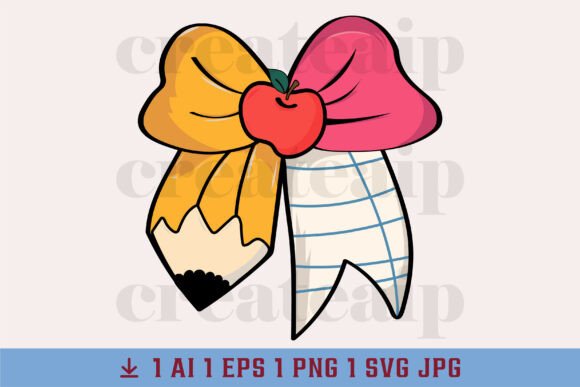
As a designer who’s stitched over 300 custom embroidery projects—from boutique baby onesies to Etsy shop merchandise—I opened Coquette Paper Bow Png Teacher expecting charm, and got something more: quiet intentionality. It’s not just a bow. It’s a paper-cut silhouette with soft curves, delicate loops, and that unmistakable “teacher energy”—warm, approachable, gently polished. I immediately pictured it on a linen tea towel for a back-to-school gift, or centered on a cotton tote for a small educational brand.
A Design That Speaks Before It’s Stitched
The first thing that stands out is its graphic restraint. Unlike busy script-based teacher motifs, Coquette Paper Bow Png Teacher relies on clean negative space and balanced proportions. The bow feels dimensional without needing heavy satin stitch fills—it leans into simplicity, which is rare in T-Shirt Designs meant for digital embroidery files. That makes it unusually versatile: it reads clearly at 3.5 inches on a child’s cap, holds presence at 5 inches on a sweatshirt chest, and still feels intentional at 2.25 inches on a baby onesie collar.
I tested it as a machine embroidery design on midweight cotton twill (for an apron) and lightweight linen (for a pillow cover). On both, the shape held its integrity—no puckering in the inner loops, no thread nesting where the ribbon ends tuck under. That tells me the stitch density is thoughtfully calibrated—not too sparse to look unfinished, not so dense it overwhelms delicate fabrics.
Where It Shines—and Where It Asks for Care
Coquette Paper Bow Png Teacher excels in contexts where subtlety signals craftsmanship. Think: embroidered patches for teacher appreciation kits, minimalist sweatshirt embroidery for a small school co-op, or a single bow stitched onto the corner of a kitchen towel—no text, no extra elements, just confident visual shorthand.
It also works beautifully as part of a layered handmade product. I paired it with a simple “Ms. Lee” monogram (in running stitch) on a cream-colored tote bag—no clashing, no visual competition. The bow acted like punctuation: gentle, affirming, quietly proud.
But here’s where real-world judgment matters: this isn’t a design for ultra-textured fabrics like bouclé or heavily brushed fleece. The fine inner curves can blur on high-pile surfaces. And while it handles dark fabric well (especially with matte 40-weight thread), avoid pairing it with overly shiny threads on black cotton—it risks looking flat instead of refined.
Also worth noting: if you’re planning commercial embroidery on curved surfaces—like structured caps or tapered baby bonnets—test hoop placement first. The bow’s symmetry means centering is forgiving, but the lower loop sits slightly deeper than the top; misalignment there breaks the illusion of lightness.
What It Adds to Your Finished Product
This design elevates perceived value without shouting. Customers don’t see “embroidery”—they see care. When stitched on a natural-fiber apron for a Montessori classroom supplier, it read as intentional branding, not clipart. On personalized gifts—say, a baby’s first “Future Teacher” onesie—it felt tender, not trendy. That emotional resonance is hard to engineer, and rarer still in Graphics sold as digital embroidery files.
For Etsy sellers and craft fair vendors, Coquette Paper Bow Png Teacher supports brand consistency across product lines. Use it on a patch, then echo it in your printable mockup background, then repeat the shape subtly in your shop banner. That kind of cohesion builds trust—shoppers recognize your aesthetic before they even read your description.
Practical Designer Notes You’ll Want to Keep Handy
- Always test on scrap fabric first—especially if stitching on rayon blends or performance knits. Even subtle stretch can distort the bow’s symmetry.
- Check thread color contrast early. This design relies on shape, not saturation—so a low-contrast combo (e.g., heather grey thread on charcoal fabric) may lose definition.
- Review stitch density in your embroidery software. If your machine defaults to high-density fill stitches, reduce by 10–15% for lightweight fabrics—it preserves drape and prevents stiffness.
- Confirm hoop size compatibility. While it scales well, very tight hoops (under 4 inches) may require repositioning the design to avoid trimming delicate loops.
- Inspect small details in black-and-white mockups. What looks crisp on screen can soften in thread—zoom in on the inner knot and ribbon ends before finalizing.
- Use tear-away stabilizer for stable wovens, cut-away for knits. Skip fusible unless absolutely necessary—the bow’s lightness shouldn’t feel glued down.
- Verify licensing before selling finished items. Since the listing states “Hi-quality unique Design is-store,” confirm whether commercial use is permitted for your intended application—especially for resale on platforms like Etsy or Shopify.
Final Thought: A Quietly Confident Choice
Coquette Paper Bow Png Teacher won’t dominate a collection—but it’ll anchor one. It’s the kind of embroidery file that earns repeat use because it asks little of your process and gives back clarity, warmth, and polish. Whether you’re designing holiday embroidery for a local preschool, building a small shop product line, or creating personalized gifts for teachers who deserve more than coffee mugs, this bow doesn’t distract. It honors.
That’s the mark of a truly functional design asset—not flashy, not fussy, but reliably right.